Anyone who wants to take photography seriously will eventually face the same question: should you buy a DSLR or a mirrorless camera? Some people are captivated by the direct, transparent world seen through a DSLR viewfinder, while others cannot live without eye-tracking autofocus and a silent shutter on a mirrorless camera. Where exactly do the two differ, and which one suits you better?
The Names Themselves Reflect the Design Philosophy
Let us start with the DSLR. DSLR stands for digital single-lens reflex camera. When you take a photo, light passes through the lens, strikes the reflex mirror inside the body, and is reflected up into the optical viewfinder. What you see is no different from what you saw in the era of film cameras. The instant you press the shutter, the mirror flips up, the light falls onto the sensor, and the photograph is captured. That crisp “click” remains, for many people, the definitive sound of a “real camera”.
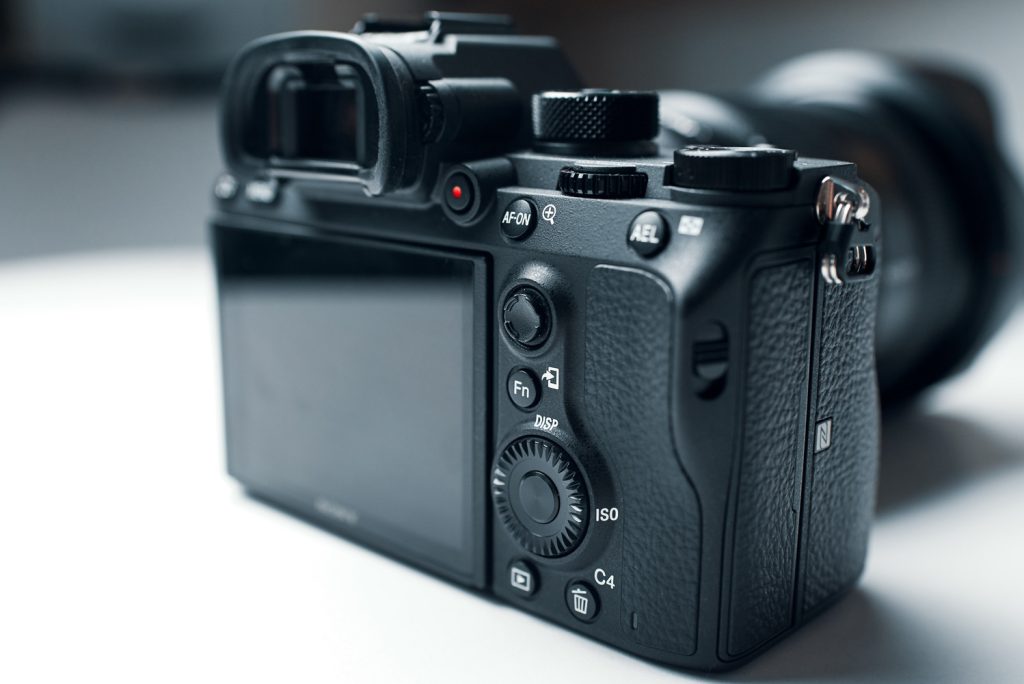
The mirrorless camera takes a completely different path: it removes the mirror altogether. Light passes through the lens and lands directly on the sensor. What you see in the viewfinder is a small screen showing, in real time, exactly what the sensor “sees”. There is no pentaprism and no mirror box. No mechanical structure is needed any more to relay the scene between your eye and the photograph.
It may be nothing more than the removal of a single mirror, yet every difference between the two stems from this one decision.
How Do They Actually Differ in Everyday Use?
Once the mirror is gone, how does the day-to-day experience of the two cameras change?
Let us begin with the viewfinder. The greatest advantage of an optical viewfinder is immediacy: there is no lag, no refreshing, and it consumes no power no matter how long you look through it. The strength of an electronic viewfinder is that what you see is what you get. Before pressing the shutter, you can preview the effects of brightness, white balance and depth of field right in the viewfinder. A histogram can be called up when needed, and both focus peaking and manual-focus magnification are genuinely useful. The trade-off is that it draws more power, and on some entry-level models the electronic viewfinder can show noise or slight lag in dim conditions.
Next, autofocus, an area where the situation has shifted remarkably fast. Only a few years ago DSLRs still held the upper hand, but the picture has now completely reversed. A modern mirrorless camera can turn almost the entire frame into an autofocus area, and recognition and tracking of human eyes, faces, animals and subjects have truly become practical. A flagship DSLR launched in 2020 still offers excellent phase-detection autofocus, but its focus points are mostly clustered near the centre of the frame, and its intelligent tracking only keeps pace with the help of newer software. Whether you shoot sports, children, birds in flight, or any subject whose movement is hard to predict, today’s mirrorless cameras make life considerably easier.
Video capability is even more clearly the home turf of mirrorless. DSLRs can of course record video, but mirrorless cameras were designed from the outset to bypass the obstacle of the mirror: there is no mirror to lock up, and autofocus is never interrupted. Nowadays, reliable continuous autofocus, better codecs, Log profiles and higher frame rates come as standard on almost every mirrorless camera. Put the other way round, as long as video makes up even twenty per cent of your shooting, a mirrorless camera will serve you far better than a DSLR.
Body size and speed are two more areas where the two pull apart. Removing the mirror box means a shorter flange distance, and the body can usually be made smaller as well. Lenses, however, do not necessarily shrink along with it, so a “compact” full-frame kit does not necessarily mean a light one. In terms of speed, mirrorless cameras offer faster burst shooting, and the electronic shutter can be completely silent. Quietness, of course, comes at a price: under artificial lighting, the electronic shutter can introduce image distortion and banding.
Then there is battery life, where the DSLR’s advantage is plain to see and remains its most solid strength today. An optical viewfinder consumes almost no power, and it is entirely normal for a DSLR to capture 800 to 1,500 shots on a single charge. A mirrorless camera, by contrast, must keep the viewfinder, the sensor and the stabilisation system on standby all day, and typically manages 300 to 700 shots per charge, shrinking further in cold weather. Carrying a few spare batteries eases the problem, though it cannot cure it entirely.
Finally, let us talk about lenses and the second-hand market, which is often what really determines the long-term investment. Canon’s EF mount and Nikon’s F mount have accumulated decades of history, and both systems are vast and mature. Second-hand bodies and lenses are remarkably affordable, and with the help of adapters many of those lenses can continue to serve on mirrorless bodies. That said, the new native mounts, Canon RF, Nikon Z, Sony E and Fujifilm X, are where every manufacturer is now designing its new lenses.
The market has already spoken volumes. According to CIPA statistics, global shipments of mirrorless cameras in 2025 were around 6.3 million units, while DSLRs reached only around 691,000. Neither Canon nor Nikon has released a new DSLR model since 2020, and Pentax is the only manufacturer still persisting with the format.
Which One Should You Choose?
After this full circle, we return to the original question: which one is better? If you look purely at photographic results, whether you shoot landscapes, portraits or street scenes, the work produced by a good DSLR and a good mirrorless camera is almost impossible to tell apart. What truly determines image quality is the size of the sensor and the lens, not whether there is a mirror inside the body.
If you already own a complete set of EF or F mount lenses, or if you spend most of your day shooting with your eye to an optical viewfinder, then carrying on with a DSLR is perfectly fine. It remains dependable.
If you are a complete beginner, or if you will shoot video, or if eye-tracking and a silent shutter matter a great deal to you, then rest assured and join the mirrorless camp. The development of new lenses and firmware updates for camera bodies are now concentrated there.
If you plan to own only one camera, the answer is even more straightforward: choose mirrorless. Development of the DSLR platform has essentially come to a halt, and the entry-level DSLRs still on sale mostly come from Canon, largely as existing stock, with the product line continuing to shrink.
One last thought. Choose a body that matches your actual needs, pair it with a good lens, and tuck a spare battery into your bag. Body technology is renewed year after year, while a good lens can accompany you for many, many years of shooting.